Where Alpine Majesty Meets Artistic Soul: Innsbruck’s Hidden Canvas
You know that feeling when nature and art collide in the most unexpected way? Innsbruck hit me like a quiet thunderstorm—soft light on snow-capped peaks, baroque churches dancing with mountain shadows, and street art tucked into medieval alleys. I didn’t go for inspiration, but I came back painting in my journal every night. This isn’t just a ski stopover; it’s a living gallery where the Alps don’t just surround the city—they perform with it. Every corner reveals a composition waiting to be noticed: a gilded balcony catching dawn, a mural echoing ancient folklore, or the way fog curls around church spires like brushstrokes in the sky. Innsbruck invites not just sightseeing, but deep seeing—where beauty is not only observed, but felt.
First Glimpse: Arrival in Innsbruck – When Mountains Become Muse
The first view of Innsbruck stirs something primal in the soul. As the train curves through the Inn Valley or the car slips beneath the Nordkette’s towering silhouette, the city appears not as an intrusion upon the landscape, but as its natural continuation. The Inn River traces a silver line through the basin, flanked by rooftops that rise like folded paper against the sheer limestone face of the Northern Limestone Alps. This is not scenery—it is stagecraft. The city’s placement, nestled at the confluence of major Alpine passes, was historically strategic, but today it feels deliberately composed, like a painter balancing light, form, and depth. The moment you step onto Maria-Theresien-Straße, the central boulevard, you are framed by two visual anchors: the towering twin spires of the Hofkirche behind you and the jagged crown of the Nordkette ahead. It is a deliberate visual rhythm—human achievement in dialogue with geological grandeur.
For many, the true artistic awakening begins with ascent. The Hungerburgbahn, a sleek cable car designed by architect Zaha Hadid, glides from the city’s edge into the alpine embrace of the Nordkette range. Each segment of the journey offers a new composition: timbered houses shrinking into miniature, the city’s golden rooftops shimmering under shifting light, and the ever-present mountains rising like sentinels. At the top, at Seegrube or Hafelekar stations, the panorama is overwhelming—not in scale alone, but in clarity. On crisp days, you can see for over 100 kilometers, across folded ridges and distant glaciers. This vantage point does more than impress; it reorients perception. From here, Innsbruck appears not as a cluster of buildings, but as a carefully balanced element within a vast, breathing artwork. The contrast between the warm hues of the city and the cool, mineral tones of the peaks creates a natural chiaroscuro, a play of light and shadow that artists have chased for centuries.
What makes Innsbruck’s arrival experience unique is not just its beauty, but its accessibility. Unlike remote mountain towns that demand arduous climbs, Innsbruck offers this sublime integration of urban and alpine life within minutes of the city center. This seamless transition from street life to high-altitude stillness allows visitors to move fluidly between roles—shopper, stroller, hiker, observer—without losing the thread of aesthetic continuity. The city doesn’t hide its mountains; it celebrates them as co-creators of its identity. Whether viewed from the banks of the Inn River at dusk or from a sun-drenched terrace in Wilten, the mountains are never backdrop. They are active participants in daily life, their moods dictating the city’s rhythm, their presence shaping its architecture, and their light transforming ordinary moments into visual poetry.
Golden Roof to Graffiti: The Evolution of Innsbruck’s Visual Language
Innsbruck’s artistic narrative begins in the 15th century with one of its most iconic symbols: the Goldenes Dachl, or Golden Roof. Perched above a graceful arcade in the Old Town, this ornate balcony is clad in 2,657 fire-gilded copper tiles, shimmering like a crown above the bustling square. Commissioned by Emperor Maximilian I, it is a masterpiece of late Gothic and early Renaissance design, where craftsmanship meets imperial ambition. The intricate reliefs beneath the eaves depict scenes of courtly life, jousting knights, and mythical figures—a visual chronicle of power and pageantry. But beyond its historical significance, the Golden Roof exemplifies a deeper truth about Innsbruck: that beauty is not reserved for grand cathedrals or distant peaks, but woven into the fabric of public space. It is art meant to be seen, shared, and celebrated by all.
From this historic anchor, the city’s visual language flows into the present with surprising fluidity. Just steps away from the Golden Roof, in the Mariahilf district, vibrant murals cover entire building façades, their bold colors and dynamic compositions a stark yet harmonious contrast to the gilded past. These works—created by local and international artists—are not mere decoration, but statements of identity, community, and contemporary expression. One mural might depict a Tyrolean farmer reimagined as a modern-day philosopher; another transforms a narrow alley into a tunnel of geometric light. The city actively supports this evolution through initiatives like the Innsbruck Street Art Festival, which invites artists to engage with urban spaces in thoughtful, site-specific ways. There is no sense of conflict between old and new; instead, a respectful dialogue unfolds, where baroque cornices frame abstract spray paint, and ancient stone walls become canvases for digital-age storytelling.
This synthesis extends to architecture across the city. The Hofburg, once an imperial residence, now houses museums and cultural institutions, its grand halls preserving Habsburg elegance while hosting modern exhibitions. Nearby, the Congress Centre, designed by Dominique Perrault, appears as a glass-and-steel wave rising from the riverbank—a deliberate contrast to tradition, yet one that respects the flow of light and water. Even residential neighborhoods reveal this layered aesthetic: timbered houses with carved floral motifs stand beside minimalist homes with floor-to-ceiling windows that frame mountain views like living paintings. Innsbruck does not freeze its history; it builds upon it, allowing each era to contribute to a cumulative visual language. The result is a city that feels both timeless and current, where every street corner offers a lesson in continuity and change.
Nature as Gallery: Alpenglow, Light, and Landscape as Living Art
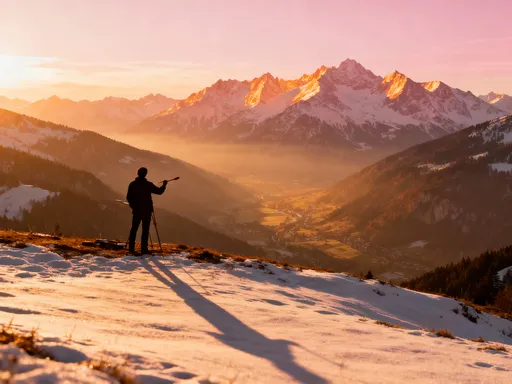
If Innsbruck’s streets are galleries, then its surrounding landscapes are vast, ever-changing masterpieces. The Alps do not merely exist here—they perform. One of the most celebrated phenomena is alpenglow, when, at dawn or dusk, the high peaks catch the sun’s rays long after the valleys have fallen into shadow. The Nordkette glows in hues of rose, amber, and violet, as if lit from within. This fleeting moment, lasting only minutes, draws photographers, painters, and quiet observers alike to vantage points across the city. It is not just a visual treat, but a reminder of nature’s impermanence and perfection. The same mountain can appear stern and forbidding in midday light, then melt into tenderness as evening approaches—a lesson in perspective as much as beauty.
Further afield, places like Lake Achensee and the Stubai Valley offer immersive experiences in natural artistry. Lake Achensee, Tyrol’s largest lake, lies cradled between steep slopes, its waters so clear they mirror the sky and surrounding peaks with near-perfect symmetry. On calm mornings, the reflection is so precise it becomes difficult to discern where earth ends and sky begins—a visual illusion that has inspired countless landscape painters. The lake’s edge, dotted with larch trees and grazing cows, feels like a scene from a Romantic-era canvas. Similarly, the Stubai Valley unfolds like a series of pastoral vignettes: glacial streams winding through alpine meadows, wooden chalets with flower boxes overflowing with color, and distant glaciers that gleam like shards of porcelain. These are not curated exhibits, but living ecosystems that invite slow, contemplative observation.
For those who paint or photograph, the region offers ideal conditions. The high altitude brings intense, clear light with sharp contrasts—perfect for capturing texture and depth. Weather shifts rapidly, transforming scenes from misty mystery to brilliant clarity within hours. This dynamism is not a challenge, but a feature. Plein air painters have long gathered in these valleys, setting up easels beside mountain streams or on sunlit ridges, capturing not just what they see, but how the light feels. Local guides occasionally offer painting excursions, combining hiking with artistic practice, allowing participants to experience the landscape through both movement and meditation. Even without a brush or camera, the act of witnessing—of standing still and truly looking—becomes a creative act in itself. In Innsbruck, nature does not ask to be conquered; it asks to be perceived.
Creative Spaces: Museums and Ateliers Breathing Life into Alpine Culture
While the outdoors serves as Innsbruck’s grandest gallery, its indoor cultural spaces provide depth, context, and intimacy. The Ferdinandeum, part of the Tyrolean State Museums, stands as a temple of regional heritage. Housed in a neoclassical building with a columned façade, it curates an extraordinary collection spanning archaeology, fine art, and scientific history. Here, visitors encounter everything from prehistoric tools found in Alpine caves to Renaissance altarpieces and 19th-century landscape paintings. What sets the Ferdinandeum apart is its narrative approach—exhibits are arranged not by chronology alone, but by theme, inviting connections between ancient craftsmanship and modern creativity. A display on mountain mythology, for instance, might juxtapose a medieval woodcarving of St. Christopher with a contemporary video installation exploring human resilience in extreme environments.
Equally compelling is the Tyrolean Folk Art Museum, located in a former noble residence near the Hofgarten. Its collection celebrates the artistry embedded in everyday rural life: hand-carved furniture, embroidered textiles, ceremonial masks, and painted chests that once traveled with brides. These objects are not presented as relics, but as expressions of identity and skill. The museum frequently hosts workshops where visitors can try their hand at traditional crafts—embroidery, woodburning, or lace-making—under the guidance of local artisans. These hands-on experiences deepen appreciation, transforming passive observation into active participation. For many guests, especially those from urban backgrounds, the realization that beauty can be functional—that a butter churn or a hay fork could also be a work of art—is both surprising and moving.
Beyond formal institutions, Innsbruck thrives on smaller, independent creative spaces. Artist studios tucked into former warehouses or quiet side streets offer a glimpse into the living pulse of local artistry. Some open their doors during events like the annual Long Night of Museums, while others welcome visitors by appointment. These ateliers often focus on themes tied to the region: the interplay of light and snow, the silence of high altitudes, or the resilience of mountain communities. Several host short-term residencies, inviting artists from across Europe to live and work in Innsbruck for weeks at a time. The resulting exhibitions—held in galleries, cafes, or even unused storefronts—feel immediate and authentic, unburdened by commercial pressures. This ecosystem of creativity ensures that art in Innsbruck is not confined to institutions, but circulates through the city like a quiet current, enriching everyday life.
Seasonal Rhythms: How Winter and Summer Paint Different Moods
Innsbruck’s artistic character shifts with the seasons, each bringing its own palette, texture, and mood. Winter drapes the city in monochrome elegance. Snow blankets rooftops, softens edges, and muffles sound, creating a world of hushed beauty. Icicles hang like crystal chandeliers from eaves, and frozen fountains become abstract sculptures. The Christmas markets, particularly the one at the foot of the Golden Roof, transform the Old Town into a luminous stage—wooden stalls glow with candlelight, garlands of pine boughs scent the air, and carolers sing beneath strings of warm bulbs. It is a season of intimacy, where warmth is sought not just in heated rooms, but in shared moments: sipping glühwein, watching children skate on temporary rinks, or attending candlelit concerts in historic churches. The Innsbruck Festival of Early Music, held in winter, enhances this atmosphere, filling baroque halls with centuries-old compositions that seem to echo the stillness outside.
Summer, by contrast, bursts with color and movement. The snow retreats, revealing meadows carpeted in wildflowers—edelweiss, gentians, and alpine roses—that climb the hillsides like splashes of paint. Hiking trails open, leading to high-altitude lakes and sun-drenched ridges where the air is crisp and the views endless. The city itself becomes more animated: outdoor cafes spill onto cobblestone streets, open-air theater performances unfold in castle courtyards, and music festivals bring jazz, folk, and classical sounds to public squares. The contrast between seasons is not opposition, but complement. Winter teaches stillness and introspection; summer invites exploration and joy. Both offer rich material for creative expression—whether through photography that captures the stark geometry of snow-laden trees or painting that attempts to hold the fleeting light of a summer sunset over the Inn Valley.
Even the festivals reflect this duality. While winter emphasizes tradition and warmth, summer leans into innovation and openness. Events like the Innsbruck Nature Film Festival or the Street Music Festival celebrate contemporary creativity while remaining rooted in the region’s spirit. These gatherings do not overwhelm the city; they are carefully scaled to preserve its charm. Visitors can choose to immerse themselves or simply observe from a bench, absorbing the atmosphere at their own pace. This balance—between celebration and serenity, activity and stillness—makes Innsbruck a year-round destination for those who seek not just entertainment, but meaning.
Beyond the City: Scenic Escapes That Feel Like Masterpieces Unfolding
While Innsbruck itself is a work of art, its surrounding region offers equally compelling compositions. One of the most striking is the Swarovski Crystal Worlds in Wattens, about 20 kilometers east. Conceived as a fusion of art, nature, and light, this attraction features a giant grass-covered head with mirrored eyes—designed by artist André Heller—spewing a waterfall into a reflecting pool. Inside, a series of chambers showcase crystal installations by renowned artists, where light refracts through glass in dazzling, dreamlike patterns. The surrounding park blends sculpture gardens with natural elements—streams, meadows, and forest paths—creating a seamless journey between human creation and organic form. Though commercial in origin, the site feels deeply artistic, a place where wonder is not manufactured, but cultivated.
Another compelling destination is Ötzi Village in Umhausen, dedicated to the 5,300-year-old ice mummy discovered in the nearby Ötztal Alps. More than a museum, it is a thematic experience that reconstructs Neolithic life through immersive exhibits and outdoor demonstrations. The design of the site—low wooden structures, natural materials, interpretive trails—echoes the simplicity and resilience of early Alpine cultures. It does not sensationalize the past, but honors it with dignity and creativity. For families and curious travelers, it offers a tangible connection to deep history, framed through modern storytelling techniques.
For those seeking solitude, the hamlet of St. Jodok, nestled along the Sill River, feels like a painting untouched by time. With its onion-domed church, grazing sheep, and views of the Tux Alps, it offers a slower, quieter rhythm. There are no crowds, no souvenir shops—just the sound of cowbells and the whisper of wind through larch trees. It is a place to walk, reflect, and sketch. These nearby destinations, easily reachable by public transit or rental bike, extend Innsbruck’s artistic narrative beyond the city limits, proving that beauty in this region is not isolated, but continuous—a tapestry woven from history, nature, and human imagination.
Traveler’s Lens: Practical Tips to Experience Innsbruck Like an Artist
To truly see Innsbruck as an artist does, one must slow down, observe closely, and engage the senses. Timing is essential. For photographers and painters, the golden hours—just after sunrise and before sunset—offer the most magical light, when the Nordkette glows and the city’s rooftops catch warm reflections. Winter mornings often bring frost-laden trees and clear skies, while summer evenings bathe the valley in soft, diffused light. Planning walks or hikes during these times enhances both visual impact and emotional resonance.
Packing light but thoughtfully makes a difference. A small sketchbook and watercolor set, or a compact camera with a good zoom lens, allows for spontaneous creativity. Many visitors find joy in documenting small details: the pattern of snow on a windowsill, the way light hits a church bell, or the texture of ancient stone walls. Joining a guided art walk or a plein air workshop can deepen the experience, offering technical tips and historical context while fostering connection with local artists.
Equally important is choosing routes that follow aesthetic flow rather than tourist checklists. Instead of rushing from the Golden Roof to the Hofkirche, try wandering through quieter districts like Dreiheiligen or Amras, where residential charm and unexpected murals await. Cross the Inn River on foot, pause on bridges to watch the water, and look back at the city skyline framed by mountains. Seek out quiet corners—courtyards, church gardens, or sunlit benches—where you can sit, breathe, and absorb. The Innsbruck Card offers free access to museums and public transport, making it easy to explore sustainably and at your own pace. Above all, resist the urge to capture everything. Sometimes, the most powerful artistic moments come not from what you record, but from what you simply allow yourself to feel.
Innsbruck doesn’t shout its beauty—it whispers in gradients of light, echoes in stone carvings, and lingers in the silence between peaks. To visit is not just to see, but to perceive. It teaches us that the finest art isn’t always framed—sometimes, it’s the world arranging itself before your eyes, asking only that you pause, look, and let it move you.