Pattaya After Dark: Hidden Gems and Handmade Treasures You’ve Never Seen
You know that feeling when you think you’ve seen it all in Pattaya—beaches, markets, crowds—until something quietly surprises you? Slowing down revealed the city’s soul: alleyway artisans, midnight bazaars, and handmade wonders no tourist guide mentions. This isn’t just shopping—it’s storytelling through crafts, flavors, and local hands at work. I discovered a side of Pattaya that doesn’t shout for attention but absolutely deserves it. Let me take you there.
The Myth of Fast Travel in Pattaya
Most travelers approach Pattaya with a checklist: sunbathe on Jomtien Beach, sip cocktails on Walking Street, snap photos at Sanctuary of Truth, then move on. The pace is fast, the itinerary tight, and the experience often fleeting. While these landmarks have their place, they represent only one layer of a city that pulses with subtler rhythms beneath the surface. Rushing from attraction to attraction means missing the quiet hum of daily life—the fisherman mending his net at dawn, the grandmother selling jasmine garlands outside a temple gate, the teenager sketching designs on a notepad while waiting for customers at a roadside stall. These moments are not staged for visitors; they unfold naturally, and they require presence to witness.
When I abandoned my rigid schedule and embraced slow travel, Pattaya transformed. Instead of measuring my day by how many places I visited, I began measuring it by how many conversations I had. I lingered at a roadside coffee cart where the vendor poured condensed milk from a chipped glass bottle, laughing as he explained how he’s served the same customers for over twenty years. I sat on a low plastic stool at a night stall where a woman flipped sticky rice cakes over a charcoal grill, her hands moving with practiced ease. These interactions weren’t just charming—they were grounding. They reminded me that travel isn’t about accumulation, but about connection.
Slow travel in Pattaya means allowing yourself to get lost in the maze of sois behind Beach Road, where laundry hangs between balconies and the scent of lemongrass drifts from open kitchen windows. It means accepting an invitation to share a meal with a shopkeeper who speaks broken English but communicates warmth through gestures and smiles. It means returning to the same market stall three nights in a row, not because you need another souvenir, but because you want to see the vendor’s daughter again—the one who shyly offers you a sample of homemade mango chili dip. This kind of travel doesn’t fit neatly into guidebooks, but it yields the richest memories.
What I brought home wasn’t just a bag of trinkets—it was a shift in perspective. Pattaya stopped being a stopover and became a story. And like any good story, it unfolded best when I stopped rushing toward the end.
Why Handmade Matters in a Mass-Produced World
In the age of global supply chains and online shopping, it’s easy to forget what a handmade object truly represents. Walk through any tourist zone, and you’ll see shelves lined with identical keychains, t-shirts, and fridge magnets—all stamped with the same logo, all produced in factories thousands of miles away. They’re convenient, yes, but they lack soul. In contrast, handmade goods from Pattaya carry the imprint of the person who made them: a slight variation in stitching, a brushstroke that curves just a little differently, the faint scent of coconut oil on a carved wooden spoon. These imperfections aren’t flaws—they’re fingerprints of authenticity.
During my time in the city, I met a woman named Nuan who works from a tiny studio near the foot of Khao Phra Tamnak Hill. She dyes silk using natural pigments extracted from jungle roots, bark, and flowers. Her hands are stained a deep indigo from years of working with morinda root, and she moves with the quiet confidence of someone who knows her craft inside out. She showed me how she ferments banana sap to create a fixative, a technique passed down from her grandmother. When I bought a scarf from her, it wasn’t just a purchase—it was a transaction layered with meaning. I wasn’t just acquiring a beautiful object; I was supporting a tradition, a family, a way of life.
Handmade items from Pattaya often reflect local materials and seasonal availability. Palm-leaf baskets are woven during the dry season when fronds are sturdiest. Coconut shell carvings are made from fruit that would otherwise be discarded. Beaded jewelry incorporates recycled glass from old bottles. These practices aren’t marketed as eco-friendly—they’re simply how things have always been done. There’s an inherent sustainability in craftsmanship that mass production can’t replicate.
Buying handmade also means engaging in a different kind of economy—one rooted in fairness and respect. Many artisans work independently or in small cooperatives, setting their own prices and controlling their own time. When you buy directly from them, your money supports not just a product, but a livelihood. I’ve learned to ask questions before I buy: Where did this come from? Who made it? How long did it take? These aren’t interrogations—they’re acknowledgments. They signal that I see the person behind the product, and that I value their time and skill.
In a world where everything feels disposable, a handmade souvenir becomes an anchor. It connects you to a place, a moment, and a human being. And long after your tan has faded and your photos have been filed away, that object continues to tell its story.
The Night Markets That Time Forgot
Pattaya Night Market on Beach Road is a spectacle in itself—bright lights, loud music, endless rows of stalls selling everything from flip-flops to fried insects. It’s popular for good reason, but its very popularity means it caters to volume, not depth. To find the quieter, more personal side of Pattaya’s night economy, you have to go deeper. Behind Soi 12, tucked between a laundromat and a shuttered karaoke bar, is a modest market that opens only after 9 PM. There’s no signage, no social media presence, no influencer check-ins. Just a row of folding tables illuminated by string lights and the occasional flickering lantern.
This is where I met Somchai, a retired schoolteacher who now paints ceramic tiles in intricate Thai patterns—lotus blossoms, temple spires, dancing apsaras. He works with a fine brush and a magnifying lamp, each piece taking several evenings to complete. He doesn’t sell to wholesalers or export his work; he prefers to hand each tile to a customer and explain the symbolism behind the design. When I bought one depicting a naga serpent coiled around a lotus stem, he told me it represents protection and spiritual growth. I didn’t just take home art—I took home a lesson.
Two stalls down, a young woman named Lek sells spiced tamarind candies wrapped in banana leaves. She makes them in her kitchen every afternoon, using a recipe from her mother. The candies are tangy, slightly smoky, and just sweet enough to balance the heat of the chili. She remembers regulars by name and adjusts the spice level to their preference. On my third visit, she handed me a small pouch without asking for payment—“for trying so many flavors,” she said with a smile. These are the moments that define this market: small, unscripted acts of generosity that make you feel like more than a customer.
One of the most memorable finds was a man named Yod who crafts *krathong*—the traditional floating offerings used during Loy Krathong festival—from recycled paper and dried flowers. His crowns are delicate, woven with jasmine and marigold, and designed to dissolve harmlessly in water. He explained that he started making them after seeing too much plastic pollute the bay during festival season. Now, he sells them not just during Loy Krathong, but year-round, encouraging people to use them as home decorations or gifts. His work is a quiet act of environmental stewardship, wrapped in cultural beauty.
What makes these markets special isn’t the merchandise—it’s the atmosphere. There’s no pressure to buy. No one follows you between stalls. You’re free to browse, ask questions, stand in silence, or simply watch. Time moves differently here. It’s not about maximizing efficiency; it’s about savoring presence. And in that stillness, you begin to notice things: the way a vendor folds a package with care, the soft clink of ceramic as pieces are rearranged, the shared laughter between neighbors who’ve known each other for decades. These are the sounds of community, and they’re worth staying up late to hear.
From Seashells to Silver: Craftsmanship in Unexpected Places
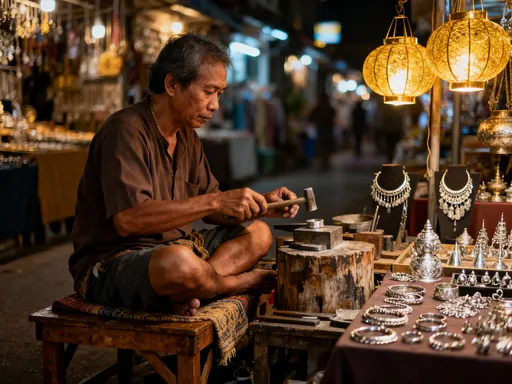
Just beyond the neon glow of Pattaya’s main drag, tucked into narrow alleys and ground-floor apartments, are workshops where craftsmanship happens in plain sight. These aren’t tourist attractions with entry fees and gift shops—they’re working spaces where artisans create out of habit, necessity, and pride. I found one such place behind a row of motorcycle repair shops, where a family has been shaping silver jewelry for over fifty years. The father, a man in his seventies with calloused hands and sharp eyes, uses tools that belonged to his father. His son heats the metal over a small blue flame, then hammers it into delicate rings and pendants. They don’t advertise. They don’t have a website. But if you know where to look, you’ll find them—and you’ll leave with a piece that carries generations of skill.
Another afternoon, I wandered into a converted garage where a group of teenagers runs a screen-printing collective. They design cotton tote bags featuring vintage Thai movie posters, retro travel ads, and traditional motifs like *phi ta khon* masks and temple murals. Their workspace is cluttered but organized—a rack of dried screens, trays of ink, and a long wooden table where damp bags hang to dry. They work collaboratively, helping each other align prints and troubleshoot smudges. One girl, barely twenty, explained how they source organic cotton and use water-based inks to reduce environmental impact. Their operation is small, but their vision is clear: to keep Thai design alive in a modern context.
Perhaps the most moving encounter was with a woman named Mali, the wife of a fisherman who docks his boat at Bali Hai Pier. Every morning, after preparing her husband’s lunch and sending her children to school, she collects broken seashells from the shore. Back in her kitchen, she sands them smooth, drills tiny holes, and strings them into earrings and necklaces. Each piece is unique—no two shells are alike. She sells them at a small stall near the pier, often to other locals rather than tourists. When I asked why she does it, she smiled and said, “It keeps my hands busy, and it makes people happy.” There’s no grand ambition here, just quiet dignity in creation.
These artisans don’t seek fame or viral attention. They don’t need Instagrammable backdrops or influencer endorsements. Their work speaks for itself. And because they’re not catering to mass demand, they can afford to take their time. A silver ring might take three days to complete. A printed tote bag might be adjusted and reprinted until the alignment is perfect. This is craftsmanship as an act of patience, not production.
Finding these creators requires more than a map—it requires curiosity. It means walking past the loud souvenir shops with their flashing signs and discounted prices. It means following the sound of a hammer on metal, or the scent of fresh ink, or the sight of sunlight catching on a strand of shell jewelry. It means being willing to pause, to ask, to listen. And when you do, you’re not just buying a souvenir—you’re becoming part of a story that’s been unfolding for decades.
Flavors as Souvenirs: Edible Treasures Worth Slowing Down For
Not all meaningful souvenirs need to be displayed on a shelf. Some are best kept in the pantry. During my evenings in Pattaya, I discovered that some of the most cherished items I brought home weren’t crafts—they were foods. And not the mass-produced kind, but small-batch, hand-prepared specialties made with care and tradition. One of the most memorable was a chili jam I found at a roadside kitchen run by a grandmother named Mae Sri. Her stall was nothing more than a folding table and a shaded umbrella, but the aroma of roasting chilies and garlic drew me in.
She explained that her jam uses only five ingredients: red chilies, garlic, lime juice, palm sugar, and salt. She roasts the chilies over charcoal, grinds them with a stone mortar, and cooks the mixture slowly in a cast-iron pot. The result is a deep, smoky condiment that lasts up to six months without preservatives. When I asked how she learned the recipe, she said, “My mother taught me, and her mother before her.” I bought three jars—one to eat, one to gift, and one to save as a reminder. Months later, opening that jar still transports me back to the sound of her mortar pounding, the smell of charred peppers, and her laughter as she warned me, “This one is strong!”
Another culinary treasure was *khanom krok*—coconut-rice pancakes traditionally cooked in a cast-iron pan with half-spherical molds. I found a vendor near Nong Nooch Garden who serves them in small cups made from banana leaves. The pancakes are crisp on the outside, soft and creamy within, with flecks of green onion and corn. He uses a family recipe that includes a splash of homemade coconut cream, which gives them a richer flavor than the versions sold at larger markets. He doesn’t use a gas stove—he cooks over a wood fire, which adds a subtle smokiness. I returned every morning for a week, not just for the taste, but for the ritual of watching him ladle the batter, listen to the sizzle, and hand over the warm cups with a nod.
Edible souvenirs connect you to place in a visceral way. They engage the senses long after your trip ends. A jar of chili jam becomes a conversation starter at dinner. A bag of hand-pressed coconut cookies reminds you of the heat of the sun and the kindness of the woman who wrapped them in wax paper. These foods aren’t just sustenance—they’re cultural vessels. They carry the taste of the soil, the rhythm of the seasons, and the wisdom of generations.
And unlike physical crafts, they encourage sharing. When I gifted a jar of Mae Sri’s jam to a friend, I didn’t just give her a condiment—I gave her a story. I described the stall, the woman, the way she stirred the pot with a wooden spoon worn smooth by years of use. That act of sharing multiplied the memory. It turned a personal experience into a communal one. In a world that often feels disconnected, that kind of connection is priceless.
The Art of Traveling Without Taking Too Much
Travel has the power to enrich, but it can also deplete—if we’re not mindful. Pattaya, like many tourist destinations, faces the challenge of balancing visitor demand with local well-being. The influx of tourists can strain resources, inflate prices, and push out small artisans in favor of large retailers. That’s why I made a personal commitment during my visit: to travel in a way that gives back, not just takes. This meant being intentional about where I spent my money, what I bought, and how I engaged with the community.
I started by asking questions. Who made this? Where was it produced? How much of the price goes to the creator? These simple inquiries shifted my shopping habits. I began avoiding stalls that sold imported trinkets labeled as “Thai handicrafts.” Instead, I sought out vendors who could tell me about their process, their materials, their lives. I prioritized fair-trade cooperatives and eco-conscious makers—those who used sustainable materials, paid fair wages, and respected cultural traditions.
One afternoon, I visited a women’s collective in a nearby village that produces handwoven scarves using natural dyes. The group employs single mothers and elderly women, offering them flexible hours and a stable income. The scarves take days to complete, and each one is signed by the weaver. Buying one felt different—it wasn’t a transaction; it was a gesture of support. I didn’t need another scarf, but I wanted to contribute to their work.
This mindset changed not only what I brought home, but how I traveled. I carried fewer items, but each one had weight—emotional, cultural, ethical. My suitcase wasn’t filled with impulse buys, but with objects that represented real connections. I stopped thinking of souvenirs as mementos of where I’d been, and started seeing them as bridges to the people I’d met.
Traveling with intention also meant respecting local customs and spaces. I avoided touching sacred objects in temples without permission. I dressed modestly when visiting residential areas. I asked before taking photos of people. These small acts of respect didn’t diminish my experience—they deepened it. They reminded me that I was a guest, not an owner. And in that humility, I found a richer, more authentic form of discovery.
Bringing Pattaya Home: How Meaningful Mementos Transform Spaces
Months after returning home, my living room looks different. A woven wall hanging from a hill tribe vendor in a night market drapes above the sofa. A tiny ceramic monk, no taller than my thumb, sits on the bookshelf. A seashell earring from Mali rests in a small wooden bowl on the coffee table. These aren’t decorative afterthoughts—they’re daily reminders of a journey that changed how I see travel.
Every time I pass the wall hanging, I remember the woman who made it—her hands moving swiftly through the reeds, her quiet pride as she showed me the pattern, a symbol of protection in her culture. When I see the ceramic monk, I recall the elderly potter who shaped it with a steady hand, his workshop filled with the scent of wet clay and incense. And when I hold the seashell earring, I think of the morning I watched Mali sort her collection by color and size, her face lit by the rising sun over the bay.
These objects do more than beautify a room—they anchor memory. They bring the sensory richness of Pattaya into my everyday life: the warmth of the sun, the sound of waves, the laughter shared over sweet iced tea. They remind me to move slowly, to listen closely, to value the handmade over the mass-produced. They are not just souvenirs—they are teachers.
And perhaps that’s the greatest gift of all. Travel doesn’t have to be about ticking off landmarks or collecting photos. It can be about cultivating presence, building connections, and bringing home more than things—bringing home transformation. Pattaya taught me that the most beautiful treasures aren’t found in bright, crowded markets. They’re found in the quiet corners, in the hands of those who create with heart, in the moments that ask nothing but your attention. And when you return, they don’t just decorate your home—they reshape your perspective.