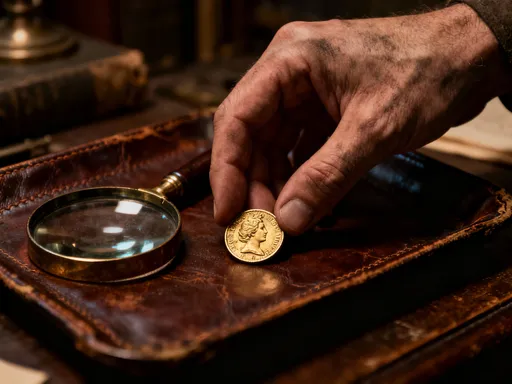
Hidden Gold in Your Pocket: Why Coin Collecting Is Smarter Than You Think
Have you ever held an old coin and wondered if it’s worth more than face value? You’re not alone. What seems like a niche hobby to most is actually a quiet powerhouse in the alternative investment world. With shifting markets and rising interest in tangible assets, coin collecting has emerged as a surprising avenue for value preservation and growth. This isn’t about luck—it’s about knowledge, timing, and strategy. Increasingly, everyday investors are recognizing that beneath the surface of ordinary currency lies the potential for extraordinary returns. Coins, when chosen wisely, offer more than nostalgia—they represent portable wealth, historical continuity, and long-term financial resilience.
The Forgotten Asset Class: What Makes Coins a Real Investment
Coin collecting is often viewed as a pastime for history buffs or retirees sorting through attic finds. Yet beneath this perception lies a powerful financial truth: coins are a legitimate and increasingly relevant asset class. Unlike volatile equities or illiquid real estate, coins combine compact value with enduring appeal. Their physical nature offers investors something rare in today’s digital economy—tangible ownership. This tangibility is not just psychological comfort; it serves as a practical hedge during periods of economic instability, currency fluctuation, or inflationary pressure. When paper money loses purchasing power, precious metal coins retain intrinsic worth based on their gold, silver, or platinum content.
But the value of coins extends beyond bullion content. Numismatic coins—those prized for rarity, design, historical context, or minting anomalies—can appreciate far beyond their metal value. A Lincoln cent with a double die error, for example, can sell for tens of thousands of dollars despite being worth one cent in circulation. The key to unlocking this potential lies in understanding three distinct layers of value: face value, melt value, and collector value. Face value is simply the denomination printed on the coin. Melt value refers to the worth of the metal if the coin were melted down. Collector value, however, is where the real opportunity lies—it is determined by demand among enthusiasts, condition, scarcity, and provenance.
What makes coin collecting particularly attractive to conservative investors is its independence from traditional financial markets. While stock prices swing with earnings reports and geopolitical events, rare coins often move on different cycles, influenced more by collector sentiment and auction trends than by quarterly GDP. This low correlation enhances portfolio diversification, reducing overall risk. Moreover, coins are highly portable and discreet. A single small box can hold tens of thousands of dollars in value, making them easier to store and transfer than real estate or even fine art. For families looking to preserve wealth across generations, coins offer a simple, durable, and educational way to pass down assets.
Riding the Market Wave: Where Opportunity Meets Demand
The coin market operates on fundamental economic principles—supply and demand—but with unique characteristics that set it apart from conventional investments. Demand for rare coins tends to rise during periods of uncertainty. When inflation climbs or stock markets waver, investors often seek refuge in physical assets they can see and hold. This flight to tangibility benefits precious metals and collectibles alike. Unlike paper assets, which can be devalued by policy decisions or digital manipulation, coins offer a sense of permanence. Their value is not dependent on corporate performance or government guarantees, but on scarcity, craftsmanship, and historical resonance.
Supply, on the other hand, is inherently limited. Once a coin series is discontinued or a minting run completed, no new specimens can be produced. This fixed supply creates upward pressure on prices over time, especially for high-grade or rare issues. For example, the U.S. Mint’s American Silver Eagle program, launched in 1986, has seen certain early-year proofs and low-mintage variants increase tenfold in value. Similarly, Canadian Maple Leaf coins, Swiss Vreneli gold pieces, and British sovereigns have gained international followings due to their purity, design consistency, and government backing. These factors contribute to a global secondary market where values are shaped by both national pride and investment demand.
Technology has also transformed access to the coin market. Online auction platforms like Heritage Auctions, GreatCollections, and APMEX have made it easier than ever for individual investors to participate. Digital grading reports, high-resolution imaging, and secure shipping have reduced barriers to entry, allowing even small-scale collectors to build diversified holdings. Social media and online forums have further fueled interest, creating communities where knowledge is shared and trends emerge. Today, a retiree in Florida can monitor a rare coin sale in London, bid in real time, and add a valuable piece to her portfolio—all from a tablet at home.
For those paying attention, these shifts present clear opportunities. Coins tied to major historical events—such as presidential inaugurations, centennial anniversaries, or space missions—often see price appreciation as public interest grows. Limited mintage coins, especially those released in small quantities or with special finishes like proof or reverse proof, tend to outperform over time. By tracking mintage figures, monitoring collector forums, and studying past auction results, investors can position themselves ahead of market surges. The most successful participants don’t chase every trend; they focus on long-term value drivers and wait for the right entry points.
The Risk Behind the Shine: What Most Collectors Get Wrong
Despite its appeal, coin collecting is not without risks—and many newcomers fall into avoidable traps. The most common mistake is assuming that age automatically equals value. A worn 1943 steel penny may look old, but unless it’s a rare copper variant, it’s worth little more than a few cents. Similarly, emotional attachment can cloud judgment. A coin inherited from a grandparent may hold sentimental value, but that doesn’t guarantee market demand. Investing based on nostalgia rather than objective criteria often leads to overpayment and disappointment.
Another widespread error is ignoring condition. In numismatics, a coin’s state of preservation can make or break its worth. A common Morgan silver dollar in circulated condition might sell for $30, while the same date and mint mark in pristine, uncirculated condition could fetch over $1,000. Yet many buyers fail to use magnifiers, lighting, or grading standards to assess quality. They accept dealer claims at face value or rely on online photos that may be misleading. Without proper evaluation, even seemingly attractive purchases can turn out to be poor investments.
Counterfeiting is also a growing concern, particularly in high-value segments. Fake coins—ranging from crude copies to sophisticated forgeries—appear regularly on online marketplaces. Some are made from base metals coated with precious metal, while others are altered to mimic rare dates or mint marks. Without authentication from a reputable grading service, buyers risk acquiring worthless replicas. This is especially true for ancient coins or foreign issues, where expertise is less common and verification harder.
Liquidity is another often-overlooked risk. While stocks can be sold in seconds, rare coins may take weeks or months to find the right buyer. Auctions typically charge seller’s fees, and private sales require trust and verification. Storage and insurance are also critical—coins left in paper flips or cardboard holders can toning, scratch, or corrode, damaging their grade. Even fingerprints, which leave oils that etch into metal over time, can reduce value. These factors underscore the importance of treating coin collecting not as casual shopping, but as a disciplined financial activity with real stakes.
Grading Is Everything: How Condition Dictates Value
In the world of coin investing, condition is not just important—it is everything. A coin’s grade is the primary determinant of its market value, often outweighing even rarity. The standard grading scale, used by professional services like the Professional Coin Grading Service (PCGS) and Numismatic Guaranty Corporation (NGC), ranges from 1 (poor) to 70 (perfect mint state). Each point reflects subtle differences in wear, luster, strike quality, and surface preservation. The difference between a grade of 64 and 65, imperceptible to most eyes, can translate into a 30% to 50% increase in price.
Take, for example, the 1909-S VDB Lincoln cent, one of the most sought-after U.S. coins. A specimen graded VG-8 might sell for around $100, while the same coin in MS-65 condition could command over $10,000. This dramatic gap illustrates how grading transforms perception into price. The reason? High-grade coins are rarer. Most coins in circulation were handled, dropped, and worn down over time. Finding one that escaped this fate is like discovering a time capsule—pristine, untouched, and historically intact.
This is why third-party grading is essential for serious investors. When a coin is submitted to PCGS or NGC, it undergoes rigorous inspection by multiple experts. It is cleaned (if appropriate), photographed, and encapsulated in a tamper-proof holder with a unique certification number. This process removes subjectivity and builds trust in the marketplace. A graded coin is not just verified—it is protected. The holder prevents future damage and allows buyers to assess value without handling the piece directly.
Understanding grading labels is equally important. Terms like “MS” (Mint State), “AU” (About Uncirculated), “XF” (Extremely Fine), and “VF” (Very Fine) indicate levels of wear. A coin labeled MS-63 has full mint luster but may show minor marks, while an MS-67 is nearly flawless under magnification. Red flags include coins described as “raw” (ungraded), those with vague terms like “looks like MS-65,” or listings that avoid mentioning wear altogether. These are often signs of inflated pricing or potential issues. For investors, the rule is clear: if it’s not graded, it’s not ready to buy—at least not as an investment.
Building a Strategy: From Casual Buyer to Smart Investor
Turning coin collecting into a strategic investment requires more than sporadic purchases or emotional choices. It demands a clear framework—goals, filters, and a long-term perspective. The most successful collectors operate like portfolio managers, applying discipline to every acquisition. They define their objectives: Is the goal long-term wealth preservation? Short-term appreciation? Or legacy building for family heirs? Each objective shapes the strategy.
One effective approach is series completion. By focusing on a specific coin series—such as Mercury dimes (1916–1945), Walking Liberty half dollars, or modern American Gold Buffalos—investors can build cohesive collections that gain value as they near completion. These sets appeal to a broad base of collectors, increasing liquidity when it’s time to sell. Within a series, priority is given to key dates, low mintage issues, and high-grade examples. For instance, the 1916-D Mercury dime, with a mintage of just over 264,000, is a cornerstone of the series and consistently appreciates in value.
Another strategy is thematic collecting. This involves assembling coins around a unifying concept—such as U.S. presidents, space exploration, or ancient civilizations. These collections tell a story, making them attractive to niche buyers and museums. A set of coins commemorating NASA missions, for example, can combine historical significance with patriotic appeal. Thematic collections often hold their value well because they cater to passionate audiences willing to pay a premium.
Budget allocation is also crucial. Smart investors set annual spending limits and stick to them. They avoid overconcentration in a single coin or metal type. Diversification within the coin market itself—across eras, countries, and metal compositions—helps mitigate risk. Some allocate 70% to bullion-based coins for stability, 20% to established numismatic issues, and 10% to speculative rarities. Performance is tracked over time, with regular reviews of auction results and price guides. This structured approach transforms passion into prudence, ensuring that emotion never overrides analysis.
Where to Buy—and Where to Be Careful
The marketplace for coins is vast and varied, offering multiple entry points for investors. Local coin shops provide the advantage of in-person inspection, allowing buyers to examine coins under magnification and lighting. Reputable dealers often offer buy-back guarantees and can provide historical context. However, inventory may be limited, and prices can be higher due to overhead costs. For serious collectors, building a relationship with a trusted local dealer can be invaluable.
Estate sales and auctions are another source, often yielding overlooked gems. Old coin folders, cigar boxes, or jewelry drawers sometimes contain rare specimens passed down through generations. These finds can be acquired at low cost, but require knowledge to identify. Without grading or documentation, however, proving authenticity can be difficult. Buyers must be cautious of misrepresented items or coins cleaned in ways that damage value.
Online platforms like eBay, APMEX, and GreatCollections offer access to global markets and real-time pricing. They provide detailed images, grading reports, and auction histories. Yet they also carry risks. Listings may include misleading photos, exaggerated descriptions, or counterfeit items. Sellers with low feedback or vague profiles should be avoided. Always verify that coins are certified by PCGS, NGC, or another major grading service. Look for listings with clear, high-resolution images and transparent return policies.
Numismatic communities and price guides play a vital role in informed decision-making. Publications like the Red Book (A Guide Book of United States Coins) offer reliable valuations based on recent sales. Online forums such as CoinTalk and Reddit’s r/coins allow collectors to ask questions, share discoveries, and spot trends. Attending coin shows or joining local clubs can also deepen knowledge and expand networks. The key is to treat every purchase as a research-backed decision, not a gamble.
The Long Game: When to Hold, When to Sell
Coin investing is not a get-rich-quick scheme. It is a long-term endeavor that rewards patience, research, and emotional discipline. Unlike day-trading or speculative stocks, numismatics thrives on time. Prices for rare coins tend to rise gradually, driven by increasing scarcity and growing collector demand. A coin bought for $500 in 2000 might be worth $3,000 today—not because of a sudden spike, but because of steady, compounding appreciation.
Knowing when to sell requires monitoring multiple signals. Market sentiment, as reflected in auction results and dealer inventories, can indicate overheating or opportunity. Economic indicators—such as inflation rates, interest rates, and gold prices—also influence coin values. During periods of high inflation, for example, precious metal coins often see increased demand. Collector trends matter too; renewed interest in a particular series can drive prices upward.
Some investors adopt a “buy and hold until retirement” strategy, treating their collections as a supplemental pension. Others sell during bull markets to lock in gains and reinvest in new opportunities. Tax considerations are important—capital gains on collectibles are taxed at a higher rate than stocks, so timing sales to minimize liability is wise. Consulting a financial advisor familiar with alternative assets can help optimize outcomes.
Ultimately, the greatest strength of coin investing lies in its quiet consistency. It does not require constant monitoring or emotional reactions to market swings. A well-curated collection grows in value not through noise, but through time, rarity, and enduring human fascination with history and craftsmanship. For the thoughtful investor, each coin is not just a piece of metal—it is a chapter in a personal financial story, passed down, preserved, and valued across generations. True wealth, after all, is not always loud. Sometimes, it’s waiting in your pocket, one coin at a time.